IGF Jurors Draw a Hard Line on Generative AI, and Big Walk Becomes the Test Case
By Noles C. · TOP Indie Finder ·
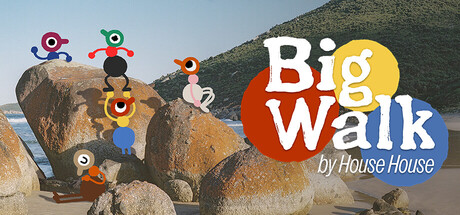
A group of jurors for the 2027 Independent Games Festival (IGF) has publicly said it will refuse to vote for any entry developed with generative AI "in any capacity", and within a day the stance had its first high-profile test case: Big Walk, the co-op walking game from Untitled Goose Game studio House House.
The statement, published on November 9 and reported by Aftermath, carries 19 named signatories, among them Austin Walker, Sam Barlow, Lena Raine, Brendon Chung and Megan Fox. The jurors write that this year's entries have been "incredible", but that there has been "a significant increase in the number of submitted games developed with generative AI tools". They list ecological, economic, cognitive and labour harms, and they explicitly refuse to treat code as an exception: "Programming is a creative discipline whose labour deserves the same respect we extend to any part of making a game." They also urge the IGF to adopt a policy for future years that disallows games containing any AI-generated work.
The group is careful about its own limits. According to the published text, IGF leadership approved its release, but the signatories say they do not speak for the IGF as an organisation or for every juror. They note that the jury pool has no consensus, that the IGF lets jurors vote according to their own values, and that some jurors were worried about signing "without professional blowback". IGF submissions closed on September 13, and finalists are due in January 2027, according to GamesIndustry.biz.
On November 10, House House released a statement to Aftermath, later quoted by GamesIndustry.biz and The Verge. The studio said it used AI tools "sparingly" in the "final stretch" of Big Walk's development. Its main use was asking chatbots about problems in third-party code, and in some cases LLM snippets were copied as a starting point and then modified. House House estimates that "well under 0.1%" of Big Walk's code had anything to do with this, and says generative AI was not used anywhere else in the game. Its worked example is a Unity URP shadow-culling bug that made the game run 50% slower for about 20 seconds at sunrise and sunset. A Unity engineer reportedly concluded the fix the studio wanted was not possible, and the eventual workaround came from a chatbot suggestion, heavily modified, of roughly 10 lines inside URP.
House House said it had disclosed this in its IGF submission, but not on Steam, because the platform "does not request disclosure of code or chatbot usage". It called its lack of an internal AI policy "a failure" and apologised that the usage "may not meet" the jurors' standards, while saying the disclosure is not an endorsement of AI tools. Sam Barlow later wrote that Big Walk was not the "impetus" for the statement, but became the "tricky edge case", and that the letter is not a call to boycott any game, The Verge reported.
Industry analysis: what this could mean for indie developers
The practical problem for small teams is that the most common uses of AI are also the hardest to see. A generated character portrait is easy to spot. A chatbot answer pasted into an engine workaround and then rewritten is not. Steam's AI disclosure, as House House describes it, doesn't cover that case. The jurors' standard does. So a studio could be fully compliant on its storefront and still fail an awards jury's test.
The upside is that a clear line is good for teams who already avoid generative AI completely: "no AI in any capacity" becomes something they can show to festivals, press and players who care about it. There is also a real gap in the market for honest, specific disclosure. House House's note names the problem, the engine, the size of the change and the share of the codebase. For any studio that has used these tools even a little, that level of detail will likely land better than silence or a vague checkbox.
The risks are real too. Small teams leaning on chatbot answers for engine bugs, localisation or boilerplate could find themselves shut out of award attention, which matters a lot for discoverability, without anyone having agreed on a threshold. Developers in insecure jobs, the very people the jurors say they want to protect, may be the least able to refuse tools their employers require. And if a game this careful and this well-liked becomes the edge case, other teams may decide disclosure is too risky and simply stop doing it.
Our practical advice is the same thing House House admitted it lacked: an internal AI policy written before production, a record of any tool use, and a disclosure written for humans, not just the minimum a storefront form asks for. Whether the IGF adopts the jurors' proposal is still undecided. Until it does, juries and players will judge these cases one by one.
Sources: Aftermath — IGF jurors' statement (Nov 9, 2026) ↗ · GamesIndustry.biz — House House clarifies AI use in Big Walk (Nov 10, 2026) ↗ · The Verge — The indie game community is in disarray over AI and Big Walk (Nov 10, 2026) ↗ · Big Walk on Steam (official) ↗. Checked 2026-11-11T01:05:00-03:00.