Unity Offers Ten Indie Teams $50,000 Each — But Its Fellowship Excludes Brazil
By Vinny Panzza · TOP Indie Finder ·
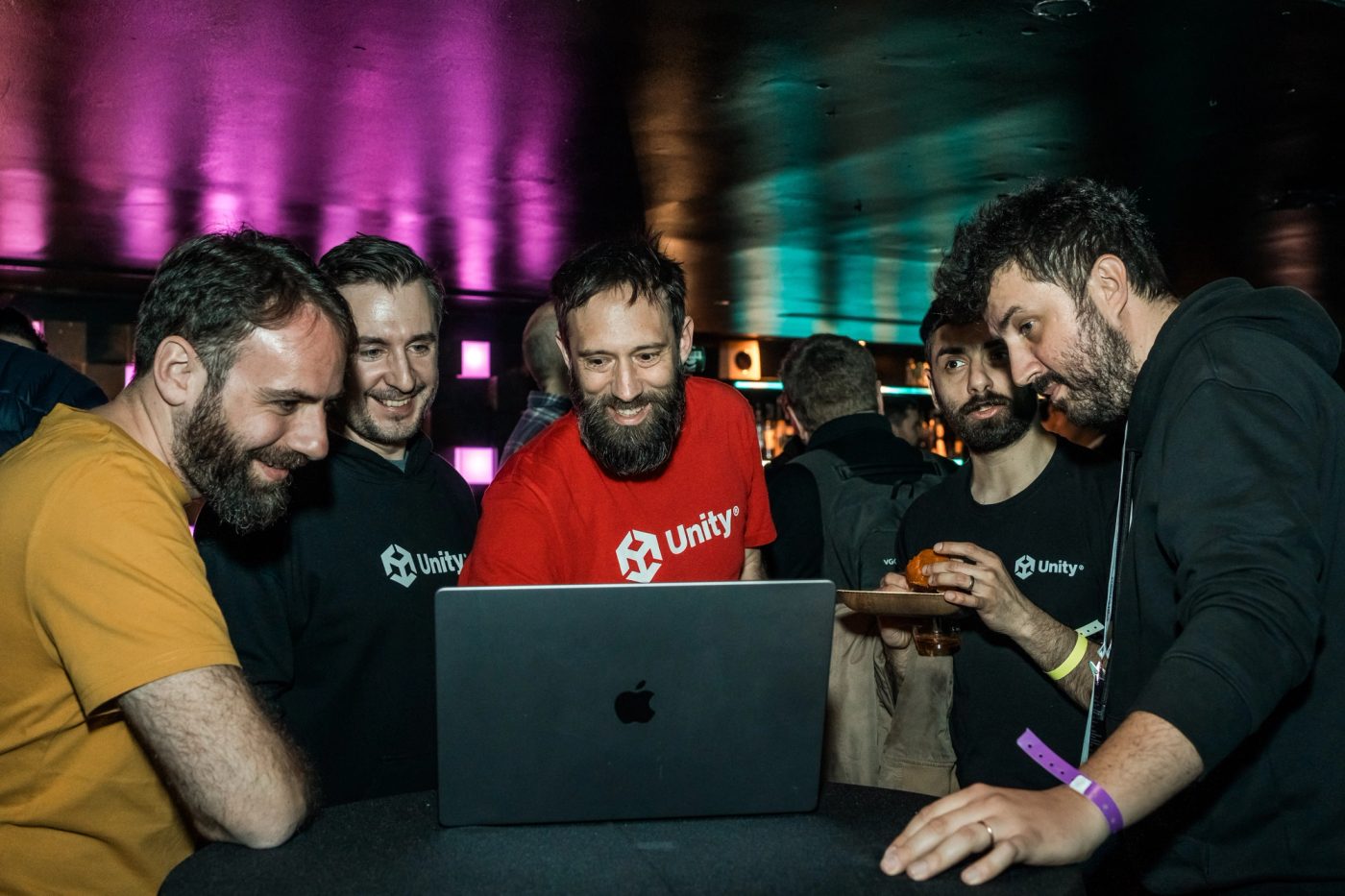
Image: Unity team at a previous Game Developers Conference event. Photo: Unity (illustrative; not an image of Fellowship award recipients). Image source.
Unity announced the Unity Fellowship on November 16, offering ten independent game teams $50,000 each to help finish projects approaching commercial release. Its financial support requires neither an equity stake nor repayment, the company says. Participants will also receive guidance from Unity specialists, a dedicated contact, possible introductions to publishers and opportunities for marketing support. The ten advertised awards together represent $500,000 in grants. That is a useful pool of targeted financing, not an automatic payment to every studio working with the engine.
Applications opened November 16 and close on December 18, 2026, at 5 p.m. Eastern Time. Unity intends to announce recipients at the Game Developers Conference in March 2027. Applicants should be independent teams using Unity, have a playable build and expect a commercial launch roughly one year away. The official terms say an applicant cannot be majority-controlled by a publisher or platform holder. Selection is discretionary: a polished demo, impressive trailer or promising idea does not by itself secure funding.
The program's geographic limitations deserve as much attention as the cash amount. Unity's published terms say applicants based in Brazil, Italy or the province of Quebec, Canada, are excluded this cycle, alongside territories subject to separate sanctions restrictions. The FAQ confirms the exclusions and attributes the additional regions to local regulatory requirements. This matters because broad announcements about supporting indie developers can sound universally accessible. Eligible geography, legal identity and residence must be checked before a team invests time in an application.
The no-equity promise does not eliminate ordinary contractual obligations. A selected team must sign a grant agreement, complete identity and payment checks, and comply with specified grant-use and reporting terms. Unity says there are no mandatory development milestone gates, which is different from saying there are no conditions at all. In an interview published November 16 by Game Developer, product executive Adam Smith emphasized discoverability and marketing as obstacles facing projects that are nearly finished. No winning projects, sales results or demonstrated Fellowship outcomes have been announced yet.
Industry analysis: what this means for indie developers
Industry analysis: the final twelve months of an indie game frequently require expenses that prototypes do not. Compatibility testing, accessibility improvements, quality assurance, localization, trailers and storefront campaigns can compete with the money needed to complete gameplay. Flexible financing could help an eligible developer hire outside testers, acquire essential hardware or run a targeted visibility campaign. Those are examples of potential uses, not specific commitments that Unity has separately promised to fund.
The program also poses a selectivity problem. Ten recipients are a very small group compared with the many independent teams releasing games each year. Studios using Godot or Unreal cannot qualify, regardless of how original their projects are. And talented developers in Brazil, Italy and Quebec face an eligibility barrier that is unrelated to the quality of their work. A studio should not budget around winning a discretionary grant or mistake nonselection for an objective judgment of its commercial prospects.
Unity benefits strategically when compelling games are built with its technology, even when it receives no direct ownership or revenue share. Successful recipients could reinforce developers' confidence in the engine and generate valuable examples for Unity to publicize. That creates an alignment of interests, but it does not guarantee that any particular title will secure a publisher, sell well or become prominent on Steam. Teams should compare a possible Fellowship award with alternative grants, publishing advances and the cost of maintaining creative control.
The takeaway is a concrete funding opportunity with meaningful conditions. Eligible teams can read the terms, prepare a playable build and articulate how the final development budget would be spent. For the broader industry, the test will be whether direct support and one-to-one guidance produce successful launches, not merely attractive announcements. Unity's exclusion list is an important fact in that evaluation, not a footnote that should disappear beneath the $50,000 headline.
Sources: Unity announcement, Nov 16 · Unity Fellowship official FAQ · Unity Fellowship terms and eligibility · Game Developer interview, Nov 16. Fact-check completed November 16, 2026.